Ligand-based design of [18F]OXD-2314 for PET imaging in non-Alzheimer’s disease tauopathies
2026.09.16.
Anton Lindberg et al., Nature Communication, 2024
Summary
Researchers developed new PET tracers to image tau protein aggregates outside of Alzheimer’s disease (non-AD tauopathies), which currently lack good imaging tools. Starting from a lead compound ([18F]OXD-2115), they created and tested over 150 analogues. Through tissue screening and computational modeling, they identified [18F]OXD-2314 as a promising candidate. It shows high affinity and selectivity for non-AD tau, along with good brain uptake and favorable safety/metabolism profiles in animal studies, and is now advancing to first-in-human PET imaging.
- Brain uptake and BBB penetration: Rapid entry into the brain following injection, indicating adequate lipophilicity and transport.
- Time–activity kinetics: Dynamic PET acquisition enabled extraction of time–activity curves (TACs), showing:
- Peak uptake
- Washout rate
- Overall kinetic suitability for quantitative imaging
- Regional distribution: MRI-based anatomical co-registration allowed VOI/ROI definition across brain regions to assess:
- Homogeneity vs regional retention
- Potential off-target binding patterns
- Clearance characteristics: Fast washout from non-target regions, supporting low nonspecific binding—a key requirement for CNS tracers.

Figure 4. A Whole brain time-activity curves of standardized uptake values (SUV) in female (pink, n = 1) and male (blue, n = 1) rat whole brains in baseline PET-CT scans using [18F]OXD-2314 (0−120 min). B Representative PET summation images of rat brain from baseline PET scans using [18F]OXD-2314. Top row shows transverse images of a male wild-type rat brain at 0–5, 5–30, and 60–120 min; bottom row shows transverse images of a female wild-type rat brain at the same time points.
-
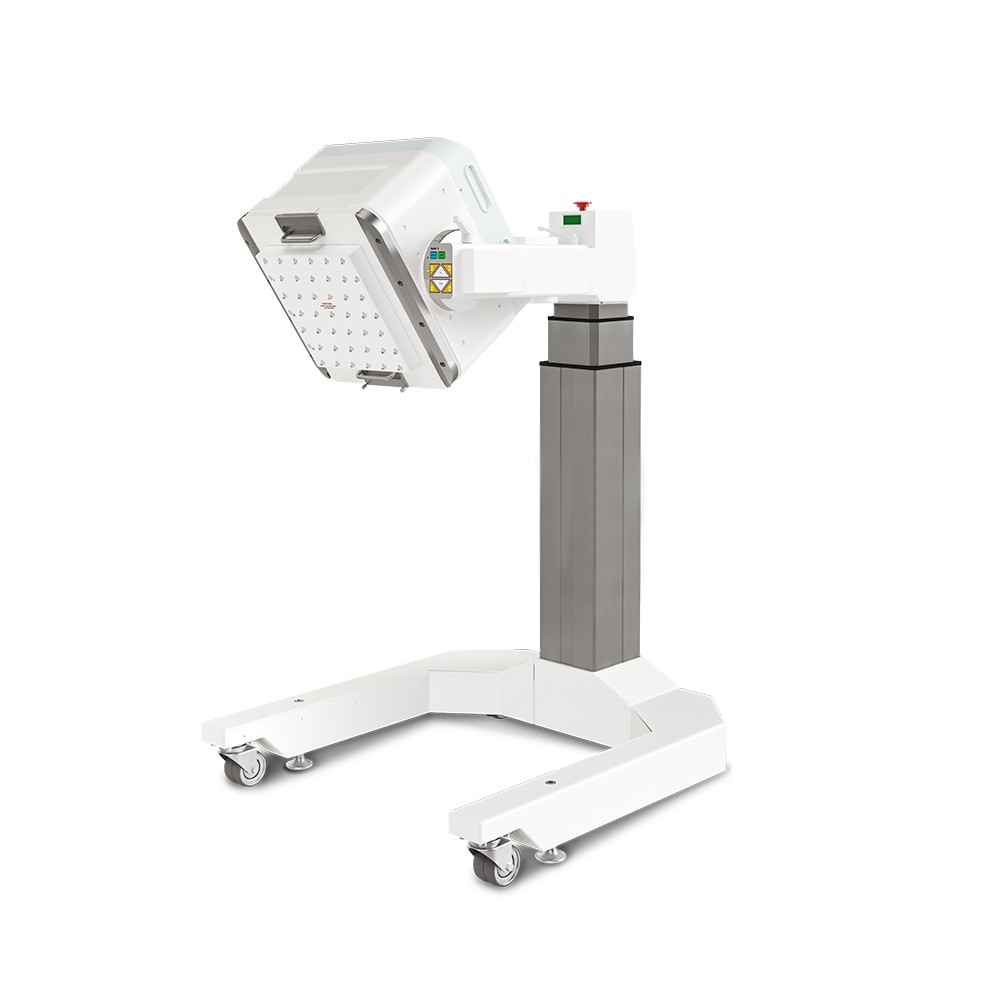
Nucline™ Gamma Camera
Outstanding system for thyroid and more
-
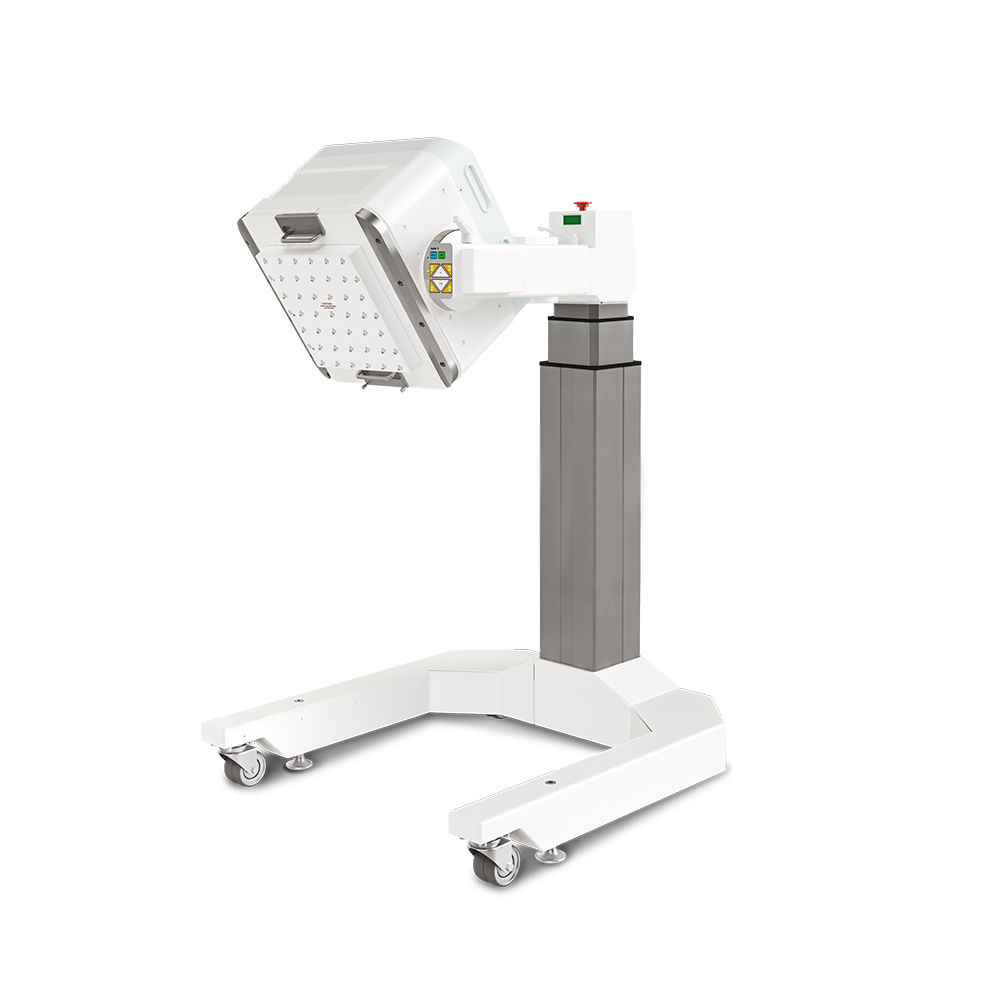
Nucline™ Gamma Camera
Nucline™ Gamma Camera
Nucline™ Gamma Camera
Outstanding system for thyroid and more
Nucline™ Gamma Camera
Nucline™ Gamma Camera
How can we help you?
Contact us for technical information and / or support related to our products and services.
Get in touch